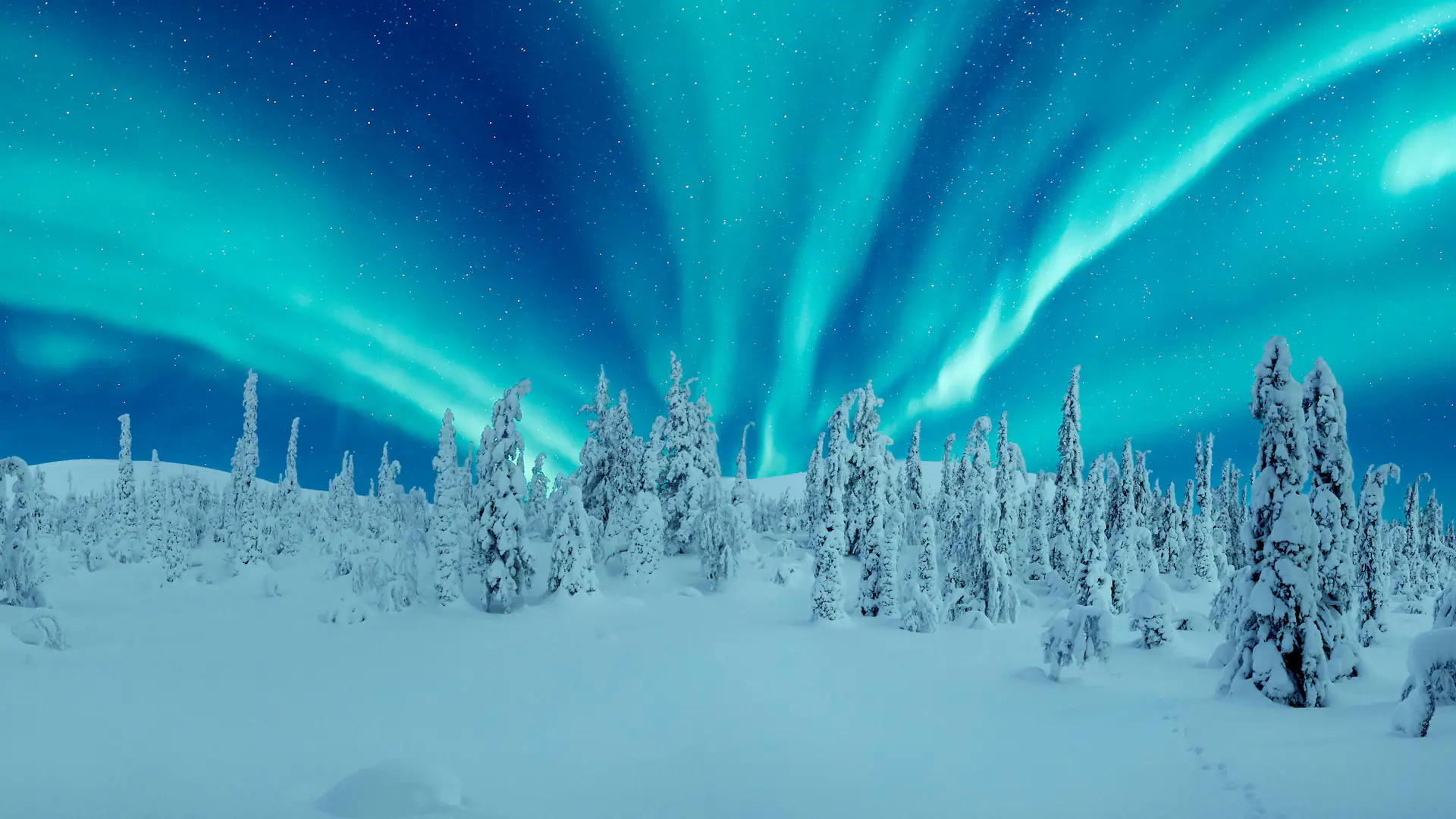
Aurora Forecast
The phrase “aurora forecast” has become increasingly popular over the last decade, and for good reason. More travelers, photographers, scientists, and skywatchers are actively planning trips around geomagnetic activity. The Northern Lights are no longer seen as random miracles in the sky; they are phenomena that can be monitored, predicted, and even strategically chased with impressive accuracy.
An aurora forecast is essentially a space weather prediction. It analyzes solar activity, geomagnetic conditions, and Earth’s magnetosphere to estimate when and where auroras will be visible. While forecasts are not perfect, they are far more sophisticated than most people realize. In fact, modern forecasting relies on satellite data, solar imaging, magnetometer readings, and complex models developed by space agencies and research institutions.
In this in-depth guide, we’ll break down everything you need to know about aurora forecasting — from how it works to how you can use it to plan the perfect Northern Lights experience. Whether you’re a traveler dreaming of Arctic skies or a science enthusiast curious about solar storms, this guide will give you expert-level clarity in a friendly, practical tone.
What Is an Aurora Forecast?
An aurora forecast is a prediction of geomagnetic activity that indicates the likelihood and intensity of auroral displays. These forecasts are typically issued by scientific organizations that monitor solar activity and space weather in real time.
At its core, an aurora forecast measures disturbances in Earth’s magnetic field caused by solar activity. When the Sun releases bursts of charged particles — often in the form of coronal mass ejections (CMEs) or solar wind streams — those particles travel toward Earth. If conditions align, they interact with our magnetosphere and create the beautiful lights we call auroras.
Forecasts usually include a Kp index, which is a numerical scale (0 to 9) representing geomagnetic activity. The higher the Kp value, the stronger and more widespread the auroral display. For example, a Kp 2 might only produce auroras in high-latitude Arctic regions, while a Kp 7 could push visibility much farther south.
Organizations such as the National Oceanic and Atmospheric Administration (NOAA) and its Space Weather Prediction Center provide official aurora forecasts. These institutions use satellite data and solar observation tools to model geomagnetic conditions with impressive accuracy.
The Science Behind the Aurora
To truly understand aurora forecasting, you need to understand what causes the aurora in the first place. And it all begins with the Sun.
The Sun constantly emits a stream of charged particles known as solar wind. Most of the time, Earth’s magnetic field deflects this wind. However, when solar activity intensifies — such as during solar flares or coronal mass ejections — the volume and speed of particles increase dramatically.
When these particles collide with Earth’s magnetosphere, they travel along magnetic field lines toward the polar regions. There, they interact with atmospheric gases like oxygen and nitrogen. Oxygen typically produces green and red lights, while nitrogen creates blue and purple hues.
Agencies like NASA closely monitor solar activity because space weather affects not only auroras but also satellites, GPS systems, power grids, and communication networks.
Auroras are most commonly seen near the geomagnetic poles because Earth’s magnetic field funnels particles toward those regions. This is why places like Tromsø and Fairbanks are considered prime aurora-viewing destinations.
Understanding the Kp Index and Geomagnetic Storm Levels
If you’ve ever checked an aurora forecast, you’ve likely encountered the Kp index. But what does it actually mean?
The Kp index is a global measure of geomagnetic activity. It ranges from 0 (very quiet) to 9 (extreme storm conditions). It’s derived from magnetometer readings around the world and updated every three hours.
Here’s a practical breakdown:
The Space Weather Prediction Center also categorizes geomagnetic storms using G-scale ratings (G1 to G5). These classifications help industries prepare for potential disruptions.
However, here’s an expert insight: Kp alone does not guarantee visibility. Cloud cover, moonlight, and local light pollution can significantly impact your experience.
Solar Cycles and Their Impact on Aurora Forecasts
Aurora activity follows the Sun’s 11-year solar cycle. During solar maximum, the Sun produces more flares and CMEs, increasing the likelihood of strong geomagnetic storms.
We are currently in an active phase of the solar cycle, which means aurora forecasts have become particularly exciting in recent years. During solar maximum, even mid-latitude regions can experience significant auroral displays.
For travelers and photographers, this is golden news. Solar maximum periods often create once-in-a-decade viewing opportunities. If you’ve been waiting for the “perfect year” to chase the lights, solar cycle timing matters more than most people realize.
Best Locations Based on Aurora Forecast Data
Aurora forecasts are location-dependent. Even with high geomagnetic activity, your latitude plays a critical role.
Prime aurora-viewing regions include:
For example, Iceland’s wide-open landscapes make it ideal for both viewing and photography. Meanwhile, interior Alaska often offers clearer winter skies.
Cities outside the Arctic circle may require a Kp 6 or higher to see auroras. That’s why checking localized visibility maps alongside global Kp predictions is essential.
Tools and Apps for Tracking Aurora Forecasts
Modern aurora chasers rely heavily on technology. There are several trusted tools that provide real-time updates.
The Space Weather Prediction Center website offers short-term forecasts, 3-day outlooks, and geomagnetic storm alerts. Additionally, multiple mobile apps provide push notifications when activity spikes.
Advanced users often monitor:
If the Bz component turns strongly negative, it indicates that solar wind is effectively connecting with Earth’s magnetic field — increasing aurora potential dramatically.
Short-Term vs Long-Term Aurora Forecasting
Aurora forecasting can be divided into two main categories: short-term and long-term.
Long-term forecasts rely on solar cycle trends and recurring solar wind patterns, such as coronal holes. These forecasts help identify generally active months.
Short-term forecasts, however, are far more accurate. Satellites positioned between the Sun and Earth can detect solar wind conditions about 30–60 minutes before they reach Earth. This gives forecasters a brief but crucial window to issue alerts.
Experienced aurora chasers often rely on real-time solar wind data rather than just daily Kp predictions.
The Role of Cloud Cover and Local Weather
Even the most perfect geomagnetic storm means nothing under heavy clouds.
An aurora forecast must always be paired with a local weather forecast. Clear skies are absolutely essential. High Arctic regions often experience frequent cloud cover, so flexibility is key.
In places like Tromsø, for example, experienced guides sometimes drive inland to escape coastal cloud systems.
Pro tip: Use satellite cloud maps and hourly forecasts to plan your viewing window carefully.
Aurora Photography and Forecast Timing
Photographers approach aurora forecasting differently from casual viewers.
Strong activity doesn’t just increase brightness — it increases movement. Rapidly shifting auroras create dramatic curtains, spirals, and coronas overhead.
When forecasts predict high solar wind speeds combined with strong southward Bz orientation, photographers know to prepare for dynamic displays.
Timing is everything. Many spectacular shows occur between 9 PM and 2 AM local time, but geomagnetic storms can happen at any hour.
Southern Lights: Aurora Australis Forecasts
While much of the focus is on the Northern Lights, the Southern Hemisphere experiences its own version known as the Aurora Australis.
Regions like southern New Zealand and Tasmania benefit from similar forecasting models. The same solar events that trigger northern auroras affect the south simultaneously.
However, population density is lower in the far south, so fewer people regularly observe them.
Common Misconceptions About Aurora Forecasts
Many beginners misunderstand aurora forecasting. Let’s clear up a few myths:
- High Kp guarantees visibility everywhere — Not true.
- Auroras only happen in winter — False; darkness is required, not cold.
- They are always green — Colors vary depending on altitude and gas interactions.
Understanding these nuances dramatically improves your expectations and experience.
Planning a Trip Around an Aurora Forecast
Planning an aurora trip requires strategy. Experts recommend staying at least 3–5 nights in a high-latitude region to maximize your chances.
Flexibility is essential. Weather systems shift quickly, and geomagnetic activity can spike unexpectedly.
Some travelers book trips during historically active months (like March and September equinox periods), when geomagnetic conditions are statistically more favorable.
The Future of Aurora Forecasting
Aurora forecasting continues to improve as satellite technology advances. Machine learning models are now being used to analyze solar imagery and predict CME trajectories more accurately.
Future missions will enhance our ability to forecast geomagnetic storms days in advance, potentially transforming how industries prepare for space weather.
As our dependence on satellite infrastructure grows, aurora forecasting will become even more important — not just for skywatchers, but for global technology systems.
Conclusion
An aurora forecast is far more than a colorful map with numbers. It’s the result of decades of space science, solar monitoring, and atmospheric research.
When you understand the science behind it — solar wind, geomagnetic storms, the Kp index, magnetic field orientation — you move from being a passive observer to an informed skywatcher.
The Northern Lights may feel magical, but they are also measurable, predictable phenomena shaped by cosmic forces. With the right tools, timing, and location, you can dramatically improve your chances of witnessing one of Earth’s most extraordinary natural spectacles.
And once you’ve seen the sky dance in waves of green, purple, and red, you’ll understand why checking the aurora forecast becomes a habit — not just a plan.
YOU MAY ALSO READ
About the Author