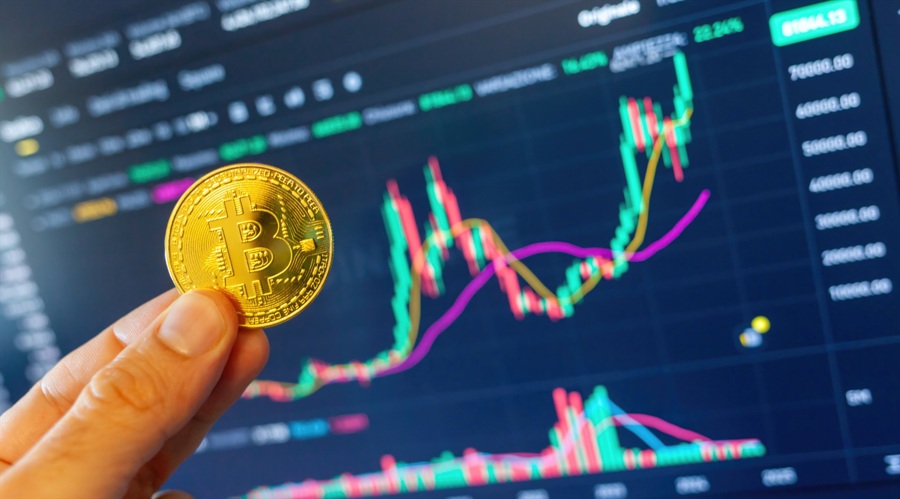
Bitcoin Price
Introduction: Understanding the Bitcoin Price Phenomenon
Bitcoin price is one of the most talked-about financial topics of the modern digital era. Whether you are a beginner hearing about cryptocurrency for the first time or an experienced investor tracking market movements daily, the price of Bitcoin represents far more than just numbers on a chart. It reflects technological innovation, economic psychology, global finance trends, and the evolution of money itself.
Bitcoin introduced a completely new idea to the world: a decentralized digital currency that operates without banks or governments controlling it. Unlike traditional assets such as stocks or gold, Bitcoin exists entirely online and is maintained through a distributed network of computers. Because of this, its price behaves differently from almost every asset class that existed before it.
What makes Bitcoin price especially fascinating is its volatility. Prices can rise or fall dramatically within hours, attracting traders, investors, institutions, and even governments. These movements are not random; they are influenced by supply mechanics, market sentiment, adoption rates, regulations, macroeconomic events, and technological developments.
In this detailed guide, we will explore Bitcoin price from every possible angle. You will learn how the price is determined, why it changes, historical trends, investment psychology, trading strategies, risks, and long-term predictions. The goal is to explain everything casually yet professionally, so you walk away with real expertise rather than surface-level knowledge.
What Is Bitcoin and Why Its Price Matter
Bitcoin is a decentralized digital currency created in 2009 by an anonymous figure known as Satoshi Nakamoto. It operates on blockchain technology, which records transactions securely and transparently across thousands of computers worldwide. No central authority controls Bitcoin, which is one of the main reasons its price attracts global attention.
The Bitcoin price matters because it represents trust in decentralized finance. When people buy Bitcoin, they are essentially expressing confidence in an alternative financial system. This makes Bitcoin not just a currency but also a technological and ideological asset.
Unlike fiat currencies, Bitcoin has a fixed supply of 21 million coins. Scarcity plays a major role in pricing. Traditional currencies can be printed endlessly by central banks, often causing inflation. Bitcoin’s limited supply creates a digital scarcity similar to precious metals like gold.
Another reason Bitcoin price matters is its influence on the entire cryptocurrency market. Most cryptocurrencies follow Bitcoin’s movements. When Bitcoin rises, the broader market often follows. When it falls, market sentiment typically turns negative across the crypto ecosystem.
How Bitcoin Price Is Determined
Bitcoin price is not set by a single authority or organization. Instead, it is determined through market supply and demand across global cryptocurrency exchanges. Every trade contributes to the real-time price you see online.
When more people want to buy Bitcoin than sell it, the price increases. Conversely, when selling pressure becomes stronger than buying interest, the price drops. This basic economic principle drives all price movements.
Liquidity also plays a significant role. Exchanges with higher trading volumes tend to influence global pricing more strongly. Institutional investors entering the market can move prices significantly because large orders impact supply availability instantly.
Market sentiment is another powerful factor. News headlines, social media discussions, and economic uncertainty often influence investor behavior faster than actual technological changes. In crypto markets, emotions frequently drive short-term price swings.
The History of Bitcoin Price: From Pennies to Global Asset
Bitcoin’s price history is one of the most extraordinary financial stories ever recorded. In 2009, Bitcoin had virtually no monetary value because it was mainly used by developers and enthusiasts experimenting with blockchain technology.
The first known Bitcoin transaction involving real goods occurred in 2010 when 10,000 BTC were used to buy two pizzas. At today’s prices, that purchase would be worth hundreds of millions of dollars, demonstrating how dramatically Bitcoin’s price has evolved.
Between 2013 and 2017, Bitcoin experienced its first major bull runs. Increased awareness, media coverage, and early exchange platforms attracted new investors. Prices surged from under $100 to nearly $20,000 by late 2017, introducing cryptocurrency to mainstream audiences.
After major corrections and market cycles, Bitcoin eventually reached new all-time highs during the early 2020s as institutional investors, hedge funds, and publicly traded companies began adopting it as a treasury asset. Each cycle strengthened Bitcoin’s position as a legitimate financial instrument.
Key Factors Influencing Bitcoin Price
Supply and Demand Dynamics
Bitcoin’s limited supply is one of its strongest price drivers. Only 21 million coins will ever exist, and new coins are introduced slowly through mining rewards. As demand increases while supply growth slows, upward price pressure naturally occurs.
Halving events reduce mining rewards roughly every four years. These events historically lead to price increases because fewer new Bitcoins enter circulation, increasing scarcity.
Demand comes from various sources, including retail investors, institutions, payment adoption, and speculative traders. Each group affects price behavior differently.
Institutional Adoption
Institutional investors dramatically changed Bitcoin price dynamics. When large financial organizations allocate funds into Bitcoin, they introduce massive capital inflows.
Institutions often hold assets long term, reducing available supply on exchanges. This creates stronger support levels and can lead to sustained bull markets rather than short-lived spikes.
Institutional involvement also increases legitimacy, encouraging cautious investors to enter the market.
Government Regulation
Regulation can both boost and suppress Bitcoin price. Positive regulatory clarity increases investor confidence, while restrictive policies often cause temporary market declines.
Countries adopting crypto-friendly frameworks tend to attract innovation and investment, which supports price growth over time.
However, uncertainty or bans in major economies can trigger fear selling, showing how sensitive Bitcoin price is to policy changes.
Bitcoin Price Volatility Explained
Bitcoin is famous for its volatility. Unlike traditional assets, price swings of 5–10% in a single day are not unusual. This volatility exists because Bitcoin markets operate 24/7 and remain relatively young compared to stock markets.
Liquidity fragmentation across multiple exchanges contributes to rapid movements. Additionally, leveraged trading amplifies price swings when positions are liquidated during sharp movements.
Psychology also plays a major role. Fear and greed cycles dominate crypto markets more strongly than traditional finance. When prices rise quickly, investors experience FOMO (fear of missing out), accelerating rallies. When prices fall, panic selling intensifies declines.
Over time, however, volatility has gradually decreased as market maturity increases.
Bitcoin Halving and Its Impact on Price
Bitcoin halving is one of the most important events influencing long-term price trends. Approximately every four years, mining rewards are cut in half, reducing the rate at which new Bitcoins are created.
Historically, halvings have preceded major bull markets. The reduction in new supply combined with increasing demand creates strong upward pressure.
The psychological effect is equally important. Investors anticipate price increases after halvings, leading to accumulation phases months before the event.
While past performance does not guarantee future results, halvings remain a central narrative in Bitcoin price forecasting.
Market Cycles: Bull Runs and Bear Markets
Bitcoin price follows recognizable market cycles consisting of accumulation, expansion, peak euphoria, and correction phases.
During accumulation, experienced investors quietly buy while public interest remains low. Prices move slowly but steadily upward.
Expansion phases occur when media attention increases and new investors enter the market. Momentum accelerates rapidly during this stage.
Peak euphoria happens when optimism becomes excessive. Prices often rise parabolically before sharp corrections occur.
Bear markets follow, allowing the ecosystem to reset before the next cycle begins. Understanding these cycles helps investors avoid emotional decision-making.
Bitcoin Price vs Traditional Assets
Bitcoin is often compared with gold, stocks, and fiat currencies. Each comparison highlights unique characteristics.
Compared to gold, Bitcoin offers digital portability and fixed supply but higher volatility. Many investors view it as “digital gold” due to scarcity.
Compared to stocks, Bitcoin lacks company earnings but offers exposure to technological adoption rather than corporate performance.
Against fiat currencies, Bitcoin serves as a hedge against inflation because its supply cannot be expanded by governments.
These comparisons influence investor perception and, ultimately, price demand.
The Role of Media and Social Influence
Media coverage significantly impacts Bitcoin price movements. Positive news stories attract new investors, while negative headlines often cause rapid sell-offs.
Social platforms amplify trends faster than traditional financial markets. Influencers, analysts, and online communities shape market sentiment daily.
Even rumors can temporarily affect prices, highlighting how perception sometimes matters as much as fundamentals in crypto markets.
As adoption grows, media influence may stabilize, but currently it remains a powerful price driver.
Bitcoin Mining and Price Relationship
Mining secures the Bitcoin network while introducing new coins into circulation. Miners receive rewards and transaction fees for validating blocks.
Mining profitability directly connects to Bitcoin price. When prices rise, mining becomes more attractive, increasing network security.
Conversely, prolonged price declines may force inefficient miners to shut down operations, reducing selling pressure over time.
Energy costs, hardware innovation, and mining competition all indirectly influence Bitcoin price dynamics.
Psychological Factors Behind Bitcoin Price Movements
Human psychology plays an enormous role in Bitcoin price behavior. Markets are driven by collective emotions rather than purely rational decisions.
Greed encourages buying during rallies, often near market tops. Fear drives selling during downturns, sometimes near market bottoms.
Confirmation bias also affects investors. People seek information supporting their existing beliefs about Bitcoin’s future.
Understanding psychological patterns helps investors maintain discipline during volatile periods.
Short-Term Trading vs Long-Term Investing
Bitcoin price attracts both traders and long-term investors, but their strategies differ significantly.
Short-term traders focus on technical analysis, price patterns, and momentum indicators. They aim to profit from daily or weekly fluctuations.
Long-term investors concentrate on adoption trends and macroeconomic factors. They believe Bitcoin’s value will increase over years rather than days.
Both approaches influence price action, creating constant interaction between speculation and long-term conviction.
Bitcoin Price Predictions and Future Outlook
Predicting Bitcoin price is challenging because multiple variables interact simultaneously. Analysts use different models, including stock-to-flow analysis, adoption curves, and macroeconomic comparisons.
Some forecasts suggest continued long-term growth as global adoption increases. Others warn about regulatory risks and technological competition.
The most realistic outlook recognizes Bitcoin as an evolving asset. Price growth may continue, but volatility will likely remain part of the journey.
Long-term trends depend on adoption, institutional participation, technological development, and global economic conditions.
Risks Associated With Bitcoin Price Investing
Despite its potential, Bitcoin investment carries risks. Volatility can cause significant short-term losses.
Regulatory uncertainty remains a concern in many regions. Governments may introduce policies affecting market accessibility.
Security risks also exist. Investors must protect private keys and use secure storage methods to avoid losses from hacks or scams.
Market manipulation, though decreasing, still occurs in less regulated exchanges.
Understanding risks is essential before investing.
How Beginners Can Analyze Bitcoin Price
New investors should start with basic analysis methods rather than complex trading strategies.
Observing long-term trends provides clearer insight than focusing on hourly movements. Learning support and resistance levels helps understand market structure.
Following macroeconomic news can also provide context, as Bitcoin increasingly reacts to global financial conditions.
Most importantly, beginners should avoid emotional trading and focus on consistent learning.
The Future Role of Bitcoin in Global Finance
Bitcoin price movements increasingly reflect its integration into global finance. Payment systems, investment portfolios, and financial infrastructure continue adopting cryptocurrency technologies.
Central banks are exploring digital currencies, indirectly validating blockchain innovation introduced by Bitcoin.
As financial systems evolve, Bitcoin may serve as both a store of value and a decentralized financial alternative.
Whether it becomes a dominant global asset or remains a specialized investment, its influence on modern finance is already undeniable.
Conclusion: Why Bitcoin Price Continues to Captivate the World
Bitcoin price represents far more than market speculation. It symbolizes technological progress, financial independence, and changing attitudes toward money.
From humble beginnings worth almost nothing to becoming a globally recognized asset, Bitcoin’s journey reflects innovation and human curiosity about new economic systems.
Its price will likely continue experiencing cycles of excitement and correction, driven by adoption, regulation, and global economic trends.
For investors, understanding Bitcoin price requires patience, education, and emotional discipline. Those who approach it with knowledge rather than hype gain the greatest advantage.
Bitcoin remains one of the most fascinating financial experiments in history — and its price tells the story of a world gradually redefining what money can be.
YOU MAY ALSO READ
About the Author