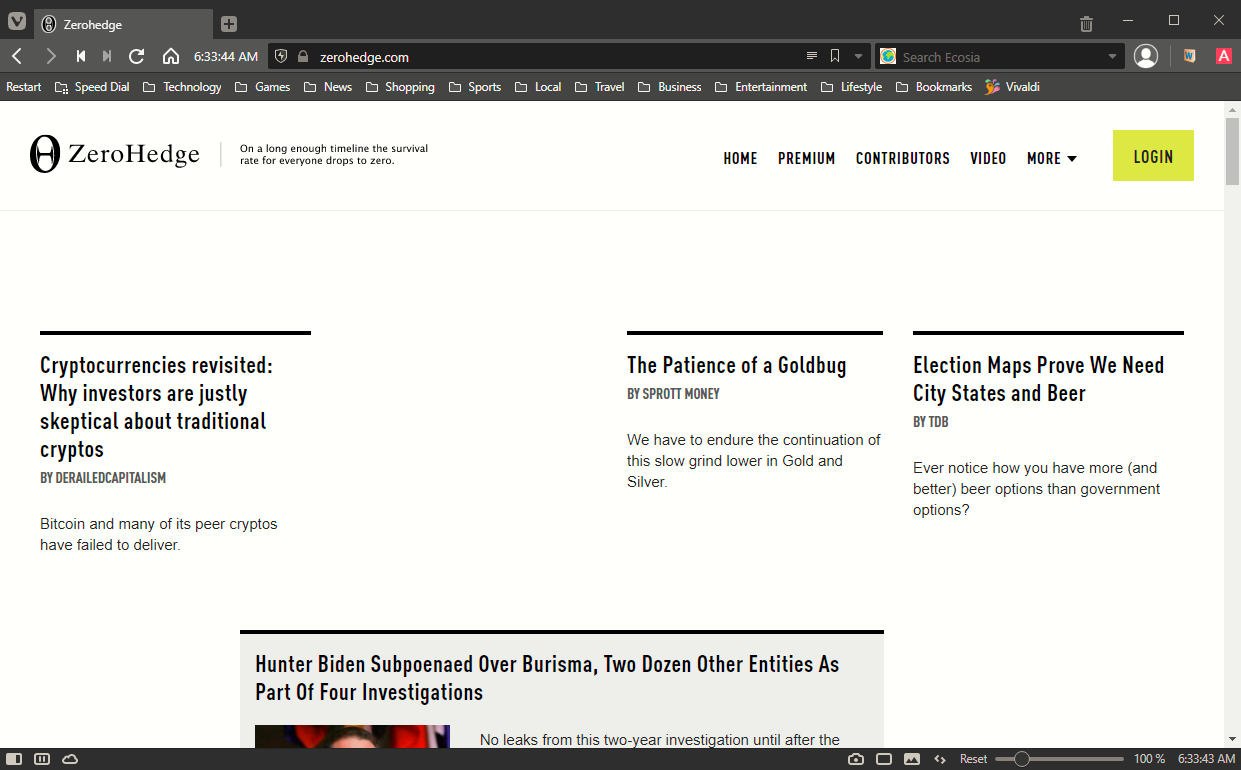
ZeroHedge
Introduction: Understanding ZeroHedge in Today’s Media Landscape
When people talk about alternative financial media, one name almost always comes up: ZeroHedge. Whether you see it as a fearless truth-teller or a provocateur that thrives on controversy, there is no denying that it has carved out a unique and influential position in the global financial conversation.
ZeroHedge emerged during a time when trust in mainstream financial institutions and media was rapidly declining. The 2008 financial crisis exposed serious flaws in banking systems, regulatory oversight, and media coverage. In that environment, readers were hungry for voices that challenged official narratives. ZeroHedge stepped into that vacuum, offering sharp commentary, aggressive skepticism, and a tone that often bordered on confrontational.
What makes ZeroHedge particularly fascinating is not just what it publishes, but how it publishes. The writing style, the choice of topics, and the framing of economic events all reflect a consistent philosophy: distrust centralized power, question official data, and prepare for systemic risk. In this article, we will explore its origins, editorial philosophy, influence, controversies, and long-term impact on financial journalism.
The Origins of ZeroHedge
ZeroHedge was launched in 2009, reportedly by a group of contributors using the collective pseudonym “Tyler Durden,” a reference to the fictional character from the novel and film Fight Club. That choice alone signaled something important. The brand identity was built around rebellion, anti-establishment thinking, and intellectual defiance.
In its early days, the platform focused heavily on financial markets. It published detailed analyses of bond markets, Federal Reserve policy, derivatives exposure, and macroeconomic data. Unlike mainstream outlets, it often highlighted systemic vulnerabilities rather than celebrating short-term growth. During the aftermath of the financial crisis, this approach resonated strongly with traders, hedge fund managers, and retail investors who felt blindsided by institutional failures.
The blog gained traction through speed and depth. It frequently posted content faster than traditional financial media, sometimes citing insider leaks or obscure data sources. This gave it a reputation for being ahead of the curve, even when its conclusions were controversial. Readers appreciated the raw tone and the willingness to publish perspectives that larger media organizations might avoid.
Over time, however, the scope expanded. What started primarily as a financial commentary site evolved into a broader platform covering geopolitics, energy markets, central banking, technology, and even cultural issues. That expansion significantly increased its audience and influence.
Editorial Style and Philosophy
ZeroHedge’s editorial voice is one of its defining characteristics. The tone is sharp, often sarcastic, and unapologetically critical. Headlines are frequently dramatic, designed to capture attention in a crowded information environment. Critics argue that this approach borders on sensationalism, while supporters see it as cutting through bureaucratic language to expose uncomfortable truths.
At its core, the platform operates from a deeply skeptical worldview. Central banks, government agencies, large corporations, and international institutions are regularly scrutinized. Monetary policy, especially actions taken by the Federal Reserve, receives consistent and detailed criticism. The site often argues that excessive money printing, debt expansion, and market intervention distort natural price discovery and create asset bubbles.
Another important aspect of its philosophy is its focus on risk. Many mainstream financial outlets tend to emphasize growth, opportunity, and innovation. ZeroHedge, by contrast, frequently highlights downside scenarios, systemic fragility, and long-term imbalances. This risk-focused lens appeals to investors who prioritize capital preservation over aggressive speculation.
Despite the confrontational tone, much of the site’s content includes data charts, economic statistics, and references to academic research. The combination of hard data and provocative commentary gives it a distinctive blend of analytical depth and emotional urgency.
Coverage of Financial Markets
One of ZeroHedge’s strongest areas has always been its coverage of financial markets. From equities and bonds to commodities and cryptocurrencies, the platform provides ongoing commentary that blends technical analysis with macroeconomic interpretation.
The site pays particular attention to central bank policy decisions. When the Federal Reserve adjusts interest rates or expands its balance sheet, ZeroHedge typically offers immediate analysis that questions the long-term consequences. It often frames quantitative easing and liquidity injections as artificial supports that delay inevitable corrections.
In the bond market, the platform frequently analyzes yield curve movements, inflation expectations, and sovereign debt sustainability. It tends to interpret flattening or inverted yield curves as warning signs of economic trouble. This perspective has made it especially popular among macro-focused investors who look beyond headline GDP growth.
Commodities coverage is another notable strength. Gold, silver, oil, and agricultural products often feature prominently in its reporting. The site has historically maintained a bullish long-term view on precious metals, arguing that fiat currency debasement will ultimately drive hard asset demand.
More recently, cryptocurrency has become a regular topic. Bitcoin and other digital assets are often discussed as potential hedges against monetary instability. While coverage can be volatile in tone, the overarching narrative usually emphasizes decentralization and financial sovereignty.
Geopolitics and Global Risk
Over time, ZeroHedge broadened its scope beyond purely financial topics. Geopolitical analysis became a major component of its editorial output. Conflicts, trade wars, sanctions, and international alliances are often examined through the lens of economic impact.
For example, trade tensions between major economies are analyzed not just as diplomatic disputes, but as catalysts for supply chain disruptions and currency volatility. Energy markets are discussed in connection with geopolitical hotspots, highlighting how political instability can influence oil and gas prices.
The platform also regularly covers developments in emerging markets. Debt crises, currency devaluations, and political unrest in developing economies are framed as early warning signals for broader systemic stress. This global perspective reinforces its central theme: interconnected systems are fragile, and local problems can quickly become global shocks.
Critics sometimes argue that the geopolitical coverage leans toward alarmism. However, supporters contend that the site provides a necessary counterbalance to overly optimistic mainstream narratives.
Controversies and Criticism
It would be impossible to discuss ZeroHedge without addressing its controversies. Over the years, the platform has faced accusations of publishing misleading information, promoting conspiracy theories, or amplifying extreme viewpoints.
Some social media platforms have temporarily restricted or banned its content, citing policy violations. These actions have fueled debates about free speech, censorship, and the boundaries of responsible journalism. Supporters argue that the site is unfairly targeted for challenging powerful institutions. Detractors claim that its editorial standards sometimes fall short of traditional journalistic norms.
Another recurring criticism involves tone. The aggressive style, dramatic headlines, and occasional hyperbolic language can undermine credibility in the eyes of more conservative readers. Traditional financial journalists often prefer neutral phrasing and carefully sourced reporting.
Despite these criticisms, ZeroHedge continues to attract a substantial audience. Its loyal readership suggests that many people value its perspective, even if they do not agree with every article.
Influence on Financial Media
ZeroHedge’s influence extends beyond its own readership. Mainstream financial outlets sometimes reference stories that first gained traction on the platform. Traders and analysts frequently share its charts and commentary on social media.
The site also played a role in normalizing alternative financial commentary. In the years following the financial crisis, more independent blogs and newsletters adopted a similarly skeptical tone. The idea that central banks should be critically examined rather than automatically trusted became more common in public discourse.
In some ways, ZeroHedge anticipated the broader shift toward decentralized media. As audiences grew increasingly skeptical of traditional institutions, platforms that emphasized independence and contrarian thinking gained popularity. The rise of Substack newsletters and independent analysts reflects a similar trend.
However, influence does not always mean endorsement. Many institutional investors read ZeroHedge not because they agree with it entirely, but because understanding diverse viewpoints can improve risk management.
The Role of Anonymous Authorship
The use of a pseudonym, “Tyler Durden,” is more than a stylistic choice. It reinforces the idea that the message matters more than the messenger. By minimizing focus on individual personalities, the platform positions itself as a collective voice of dissent.
This anonymity has advantages and disadvantages. On one hand, it allows contributors to speak freely without personal reputational risk. On the other hand, it complicates accountability. Readers cannot easily evaluate the background or credentials of specific authors.
In the digital age, anonymous commentary is increasingly common. Yet in financial journalism, where credibility and trust are paramount, anonymity remains controversial. ZeroHedge’s sustained popularity suggests that many readers are willing to prioritize content over identifiable authorship.
ZeroHedge in the Era of Social Media
Social media has amplified ZeroHedge’s reach dramatically. Articles are widely shared on platforms like X (formerly Twitter), where short, punchy headlines perform well. The site’s dramatic framing aligns naturally with the fast-paced, attention-driven dynamics of social media feeds.
At the same time, this environment can intensify polarization. Articles that highlight systemic risk or institutional failure often generate strong emotional reactions. Algorithms may amplify the most provocative content, reinforcing echo chambers.
Despite these challenges, ZeroHedge has adapted effectively. It continues to publish high-frequency updates, leveraging digital distribution channels to maintain visibility.
Evaluating Credibility and Usefulness
From a professional standpoint, how should readers approach ZeroHedge? The answer requires nuance. It is neither infallible nor entirely dismissible.
For investors and analysts, the platform can serve as a valuable source of alternative perspectives. Reading contrarian viewpoints helps stress-test assumptions and identify blind spots. Even if a specific forecast does not materialize, the underlying risk analysis may still offer insight.
However, readers should cross-reference claims with primary data sources and established research. Sensational headlines can exaggerate legitimate concerns. Critical thinking remains essential.
In essence, ZeroHedge functions best as one input among many. Used responsibly, it can enhance awareness of systemic vulnerabilities. Taken uncritically, it can foster unnecessary fear.
The Future of ZeroHedge
Looking ahead, ZeroHedge’s future will likely depend on its ability to balance bold commentary with factual rigor. The demand for independent financial analysis is unlikely to disappear. In fact, ongoing economic uncertainty may increase appetite for alternative viewpoints.
Technological shifts, regulatory changes, and evolving media standards will also shape its trajectory. As artificial intelligence transforms content creation and distribution, maintaining credibility will become even more important.
Ultimately, ZeroHedge represents more than just a website. It embodies a broader cultural shift toward skepticism of centralized authority and a desire for decentralized information sources. Whether one agrees with its perspective or not, its impact on financial discourse is undeniable.
Conclusion: A Platform That Sparks Debate
ZeroHedge stands at the intersection of finance, politics, and digital media. It challenges mainstream narratives, questions powerful institutions, and consistently emphasizes systemic risk. For some readers, it is an indispensable source of insight. For others, it is a controversial voice that requires careful scrutiny.
What is clear is that it has changed the conversation. By refusing to adopt a neutral tone and by consistently highlighting downside risks, it has influenced how many investors think about markets and macroeconomics.
In a world where information flows faster than ever and trust in institutions continues to evolve, platforms like ZeroHedge will remain part of the landscape. The key for readers is not blind acceptance or outright dismissal, but thoughtful engagement.
YOU MAY ALSO READ
About the Author